Need a starlight USB camera module for a low-light imaging project?
Share your application, lighting condition, resolution target, lens/FOV needs, USB/UVC host platform, board size limits, and quantity range so Supertek can review the project direction and discuss whether SC2210 or another module path should be considered.
Send Specs for Review Request Camera Module Quote
Choosing a Starlight USB Camera Module Manufacturer
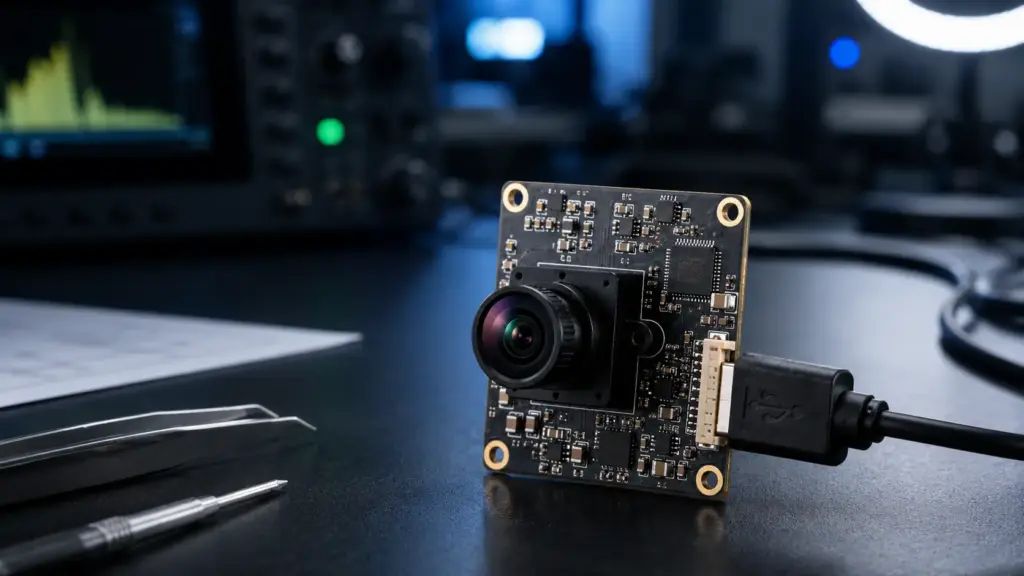
A starlight USB camera module manufacturer should help you compare the camera sensor, resolution, frame rate, lens, field of view, USB interface, UVC behavior, board size, low-light condition, and customization needs before quotation. Exact low-light results depend on the full imaging condition, so final selection should be based on model specs, host integration, sample validation, and available project documentation.
When a Starlight USB Camera Module Fits Your Project
A starlight USB camera module may be relevant when your device needs image capture in dim or changing light while still using a USB interface for integration.
- embedded vision devices that need low-light image capture;
- industrial equipment where lighting conditions are not always stable;
- security, smart city, or monitoring devices that need low-light review;
- robotics or inspection systems where lens, board size, and host support matter;
- OEM projects that need a module reviewed against enclosure, cable, and software constraints.
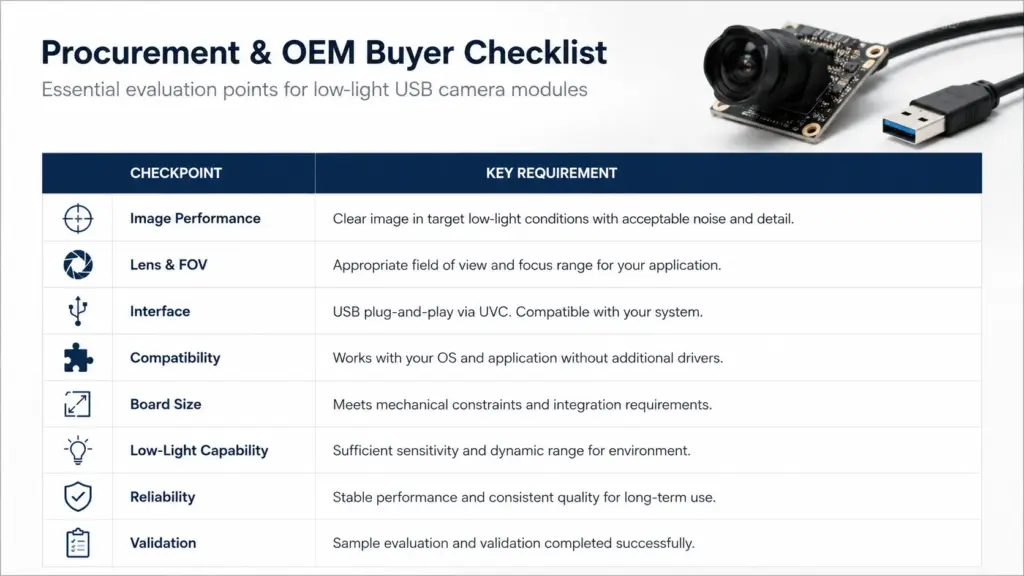
A starlight module should not be selected by the word “starlight” alone. Confirm the lighting level, target image quality, lens/FOV, exposure conditions, host platform, mechanical space, and validation plan before choosing a model.
How to Compare Starlight USB Camera Module Specs
Before you ask for a quote, prepare the technical details that affect both image quality and integration.
| Requirement | Why It Matters | What to Confirm | Evidence Needed |
|---|---|---|---|
| Sensor type | Affects sensitivity, noise behavior, resolution, and image output. | Sensor model, optical format, pixel size, output format. | Datasheet or product specification. |
| Resolution and frame rate | Determines image detail and motion handling. | Target resolution, required FPS, compression format. | Model-specific spec table. |
| Low-light condition | “Low light” can mean different environments. | Lighting level, scene movement, exposure limits, IR/NIR need. | Sample test or application review. |
| Lens and FOV | Affects coverage, distortion, working distance, and image detail. | Lens type, FOV, focus type, working distance. | Drawing or optical requirement. |
| USB interface | Affects host connection and bandwidth. | USB2.0 or another interface requirement. | Product spec and host test. |
| UVC behavior | Affects driver and platform integration. | Host OS, UVC requirement, supported formats. | UVC/driver review and sample test. |
| Board size and connector | Affects mechanical integration. | PCB dimensions, connector, cable length, mounting limits. | Drawing or mechanical file. |
| Customization need | Affects engineering review scope. | Lens, cable, PCB, firmware, enclosure, document needs. | RFQ file and technical review. |
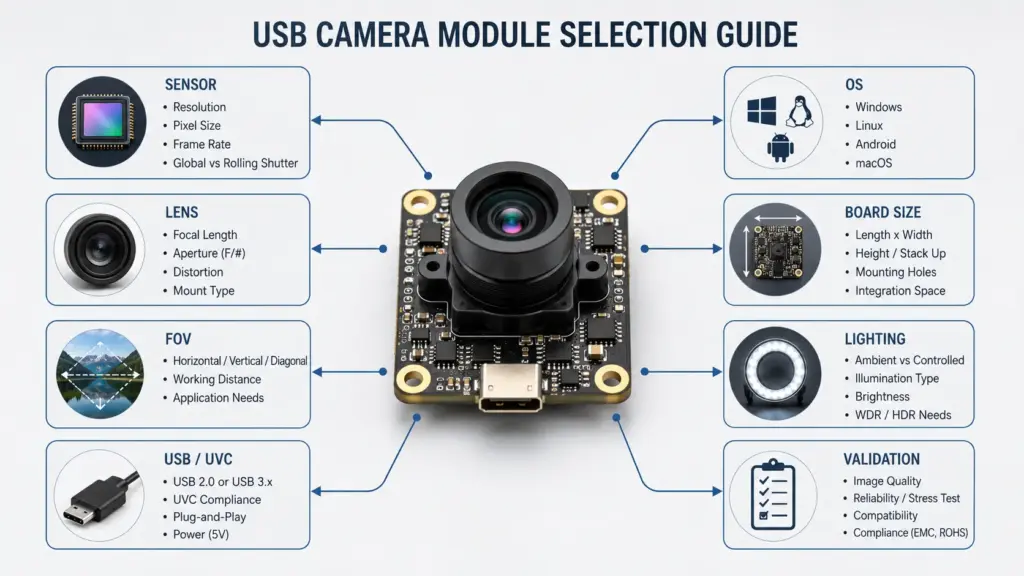
For USB camera projects, confirm UVC behavior instead of assuming every USB camera will behave the same on every host. USB-IF maintains USB Video Class specification documents, and Microsoft documents UVC driver support for Windows camera implementations.
Sensor, Resolution, Frame Rate, and Low-Light Conditions
A higher resolution is not always the best answer for a low-light project. Resolution, frame rate, sensor sensitivity, pixel size, lens aperture, exposure time, lighting, and image processing all affect the final result.
- Is the scene dim but visible to the human eye?
- Is there active IR/NIR illumination?
- Does the scene have strong backlight or high contrast?
- Is motion blur a concern?
- Is color image capture required in low light?
- Will the module be used indoors, outdoors, or inside an enclosure?
Lens, FOV, Board Size, USB Interface, and UVC Support
A starlight USB camera module also needs to fit the physical and software environment. Confirm field of view, focus type, working distance, PCB size, mounting position, connector, cable length, USB interface, host OS, required output format, UVC behavior, and available space for heat, cable bend, and assembly.
Example: SC2210 Starlight USB2.0 Camera Module
Supertek lists a 2.0MP Starlight CMOS Sensor – SC2210 camera module as a USB2.0 camera module option. Its public product page lists model-specific items such as SC2210 sensor, 1920H × 1080V resolution, 30 fps, 72° FOV, UVC compliance, USB2.0 output, and 38 mm × 38 mm module size. Treat these as SC2210-specific public specs and confirm host-system fit before design-in.
| Publicly Listed Item | Listed / Review Value | Buyer Note |
|---|---|---|
| Image sensor | 1/1.8” SC2210 | Treat as model-specific, not a claim for all modules. |
| Resolution | 2.0MP, 1920H × 1080V | Confirm whether this meets your image-detail requirement. |
| Frame rate | 30 fps at 1920 × 1080 | Confirm format and FPS with your host system. |
| Output / power supply | USB2.0 | Check bandwidth and platform fit. |
| Protocol / connection | Plug & Play, UVC compliant | Validate actual host behavior during testing. |
| FOV | 72° | Confirm working distance and scene coverage. |
| Module size | 38 mm × 38 mm | Check enclosure and mounting constraints. |
| Host / OS support | Product page lists Windows support; other host requirements should be confirmed. | Confirm Linux, Android, or embedded host needs during technical review before design-in. |
Ask Supertek to review your SC2210 fit or suggest an alternative module path.
Starlight, Low-Light, IR, and WDR Are Not the Same
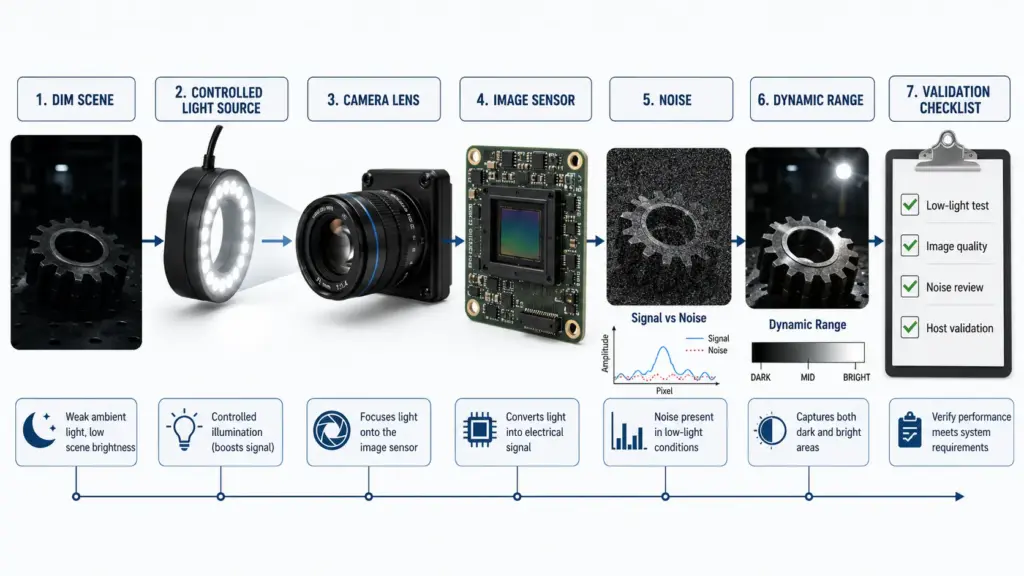
Many RFQs use “starlight,” “low-light,” “night vision,” “IR,” and “WDR” as if they mean the same thing. They do not.
| Term | What It Usually Refers To | What to Confirm |
|---|---|---|
| Starlight camera module | A module intended for very low-light image capture. | Sensor, lens, exposure behavior, lighting condition, and test result. |
| Low-light camera module | A broader category for dim-environment imaging. | Required image quality, noise level, frame rate, and scene movement. |
| IR / NIR night vision | Imaging with infrared or near-infrared illumination. | IR filter, sensor response, illumination source, and color requirement. |
| WDR | Handling scenes with bright and dark areas together. | Backlight condition, dynamic range requirement, and output quality. |
| UVC USB camera | A USB camera using USB Video Class behavior. | Host OS, format support, driver behavior, and application compatibility. |
Use these terms to describe the project condition, not as a substitute for testing. A lower lux value or a stronger label does not automatically guarantee the best result in your device.
Application-Fit Table for OEM and Industrial Projects
| Project Scenario | Key Imaging Condition | Integration Check | Validation Note |
|---|---|---|---|
| Low-light monitoring device | Dim scene, possible motion, possible IR/NIR. | Sensor, lens, exposure, output format, host platform. | Test with the actual lighting condition. |
| Industrial equipment | Controlled but uneven lighting. | FOV, working distance, mounting, USB cable route. | Validate in the equipment environment. |
| Robotics or embedded vision | Movement, size limits, compute platform. | Board size, frame rate, UVC behavior, cable length. | Confirm image stability and platform support. |
| Smart city or security device | Low light, high contrast, outdoor variables. | Low-light behavior, WDR need, enclosure and lens. | Avoid claims until tested in target scene. |
| Wearable or compact device | Tight space and power constraints. | PCB size, connector, cable, lens height. | Confirm mechanical design before sample approval. |
| Custom OEM product | Specific enclosure, optical path, and firmware needs. | Lens/FOV, board layout, interface, documents. | Send drawings and requirements for review. |
Customization and Engineering Review Requirements
For a custom starlight USB camera module project, send enough information for engineering review before asking for a final quote.
- application and device type;
- target lighting condition;
- required resolution and frame rate;
- image output format;
- USB interface requirement;
- host OS or embedded platform;
- UVC requirement;
- lens type and FOV;
- working distance;
- PCB size limit;
- cable and connector requirement;
- operating environment;
- expected quantity range;
- document or testing requirements.
What to Send Before Requesting a Quote
A complete RFQ helps avoid vague answers. Use this checklist before contacting Supertek.
| RFQ Item | What to Provide |
|---|---|
| Application | What device or system will use the camera module? |
| Lighting condition | Describe brightness, IR/NIR use, backlight, movement, and test environment. |
| Resolution/FPS target | State required image size and frame rate. |
| Lens/FOV | Provide field of view, focus distance, lens height limits, and distortion concerns. |
| Interface | Confirm USB2.0, USB3.0, MIPI, or other interface needs. |
| Host platform | Provide OS, embedded board, processor platform, and UVC requirement. |
| Mechanical limits | Share PCB size, mounting, connector, cable, and enclosure drawings if available. |
| Output format | Confirm MJPEG, YUV, H.264, H.265, or other format needs. |
| Quantity range | Give prototype and expected production quantity ranges. |
| Documents needed | Ask for available datasheet, drawing, test data, certification scope, or QC documents. |
| Validation plan | Explain sample test conditions and acceptance criteria. |
Documents to Ask For Before Supplier Approval
Ask what is available for the specific module or project.
| Document | Why It Helps |
|---|---|
| Product datasheet | Confirms core specs and electrical/optical parameters. |
| Mechanical drawing | Helps check PCB size, mounting, connector, and enclosure fit. |
| Lens or FOV information | Helps validate scene coverage and working distance. |
| Output format details | Helps software and host integration review. |
| Test data or sample images | Helps compare performance under relevant conditions. |
| Certification scope | Helps procurement review document needs without assuming compliance. |
| QC or inspection information | Helps assess supplier review process. |
| Sample notes | Helps define what should be tested before design-in. |
Outbound Technical References
Use these external references for engineering context. They do not replace product-specific testing or Supertek project review.
- USB-IF USB Video Class v1.5 document set — reference for UVC specification documents.
- Microsoft USB Video Class driver overview — Windows UVC driver context.
- Microsoft UVC camera implementation guide — implementation details for UVC camera behavior.
- Sony Semiconductor security image sensor technology — general low-light and near-infrared sensor background.
Related Supertek Camera Module Options
For buyers comparing related options, Supertek also has public pages for USB2.0 camera modules and low-light camera modules.
- SC2210 starlight USB2.0 camera module product page
- USB2.0 camera module catalogue
- Low-light camera module category page
FAQ
What is a starlight USB camera module?
A starlight USB camera module is a board-level USB camera module intended for low-light image capture. Buyers should still confirm the sensor, lens, FOV, output format, UVC behavior, board size, and real lighting condition before selecting a model.
How do I choose a starlight USB camera module manufacturer?
Compare the manufacturer’s available module specs, customization review process, engineering communication, documentation support, sample validation path, and RFQ requirements. Avoid choosing based only on a low-light label or an unsupported performance claim.
What specs should I compare before requesting a quote?
Compare sensor model, resolution, frame rate, output format, lens/FOV, board size, connector, cable, USB interface, UVC behavior, supported host platform, operating environment, and available documents.
Is a lower lux rating always better?
Not always. Lux values depend on test conditions, exposure settings, sensor behavior, lens, lighting spectrum, and the required image result. Ask for model-specific evidence or test samples under conditions close to your application.
Can the camera module be customized?
For custom projects, send your application, lighting condition, lens/FOV needs, board size limits, interface, host platform, quantity range, and document requirements for review. Do not assume every parameter can be changed until engineering confirms the scope.
What should I send for an RFQ?
Send the application, lighting condition, target resolution/FPS, lens/FOV, interface, host OS, UVC requirement, board size limit, connector/cable requirement, quantity range, and document needs.
What documents should I ask a supplier for?
Ask what is available for the specific module: datasheet, mechanical drawing, lens/FOV details, output format information, sample test data, certification scope, QC information, and sample approval notes.
Send Your Starlight USB Camera Module Requirements
Share your project requirements so Supertek can review the right module direction.
- application and use environment;
- lighting condition;
- resolution and frame rate target;
- lens/FOV requirement;
- USB/UVC and host platform details;
- board size and connector limits;
- quantity range;
- required documents or validation needs.