Looking for a global shutter USB camera module supplier is usually not just a product search. You need to know whether the module can match your motion conditions, interface requirements, lens/FOV needs, host system, mechanical limits, and purchasing process.
Supertek lists global shutter camera modules and USB camera module categories for buyers evaluating embedded vision, inspection, robotics, security, IoT, and OEM camera projects. For the right technical review, share your application, target resolution and frame rate, USB interface requirement, lens/FOV, size limits, cable or connector needs, host system, quantity, and document requirements.
Request technical review: Send your camera module requirements to Supertek with your application details and target specifications.
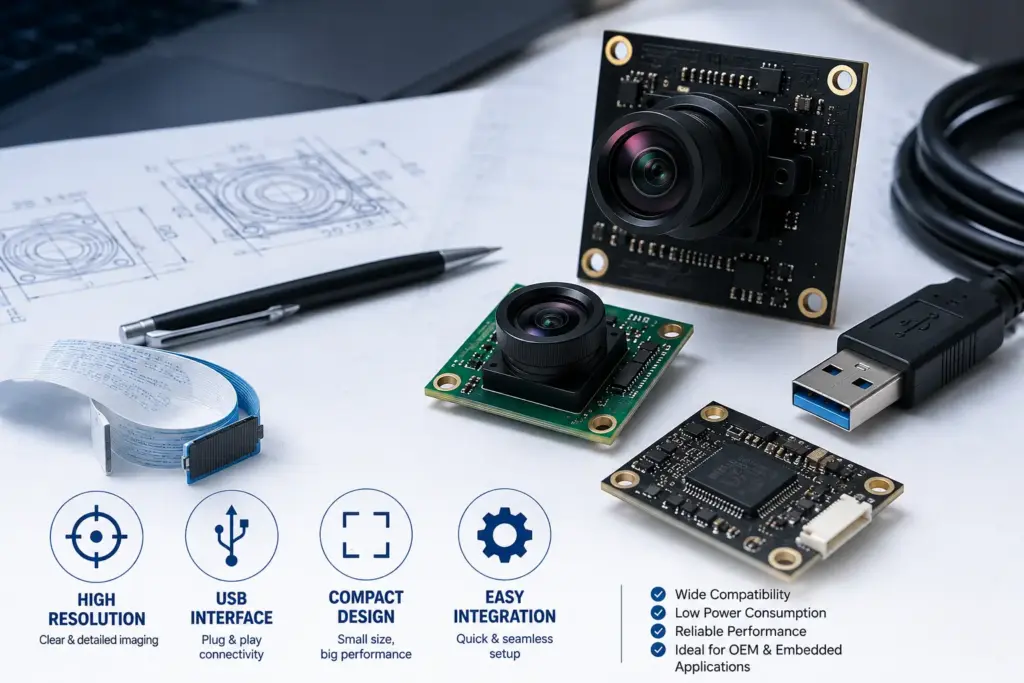
How to Choose a Global Shutter USB Camera Module Manufacturer
Choose a global shutter USB camera module manufacturer by matching the module to your motion speed, resolution, frame rate, USB interface, lens/FOV, PCB size, lighting, host system, and customization needs. A complete RFQ should include your application, target specs, quantity, integration limits, and required documents. Avoid selecting only by resolution, price, or a generic “global shutter” label.
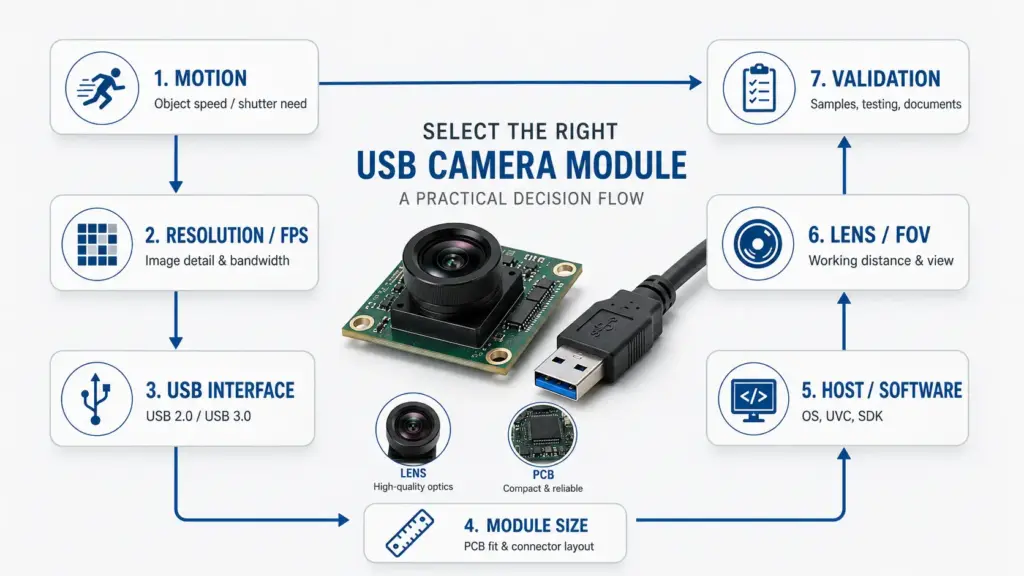
Global Shutter USB Camera Module Selection Factors
A global shutter module is often considered when the image includes motion. In general camera-sensor terms, a global shutter exposes the full image at the same time, while rolling shutter exposure happens line by line. For a deeper technical explanation, see Basler’s overview of CMOS global shutter cameras. This is why global shutter technology is often reviewed for moving-object applications where motion distortion may affect the result.
For a USB camera module project, shutter type is only one part of the decision. The module still needs to match the interface, resolution, frame rate, lens, FOV, lighting, software, and mechanical design.
| Selection Factor | What to Check | Why It Matters | What to Send to Supertek |
|---|---|---|---|
| Motion condition | Object speed, trigger timing, vibration, moving platform | Helps decide whether global shutter is needed | Sample video, use case, speed estimate, capture distance |
| Resolution | Required image detail and inspection area | Higher resolution may affect bandwidth and processing load | Target resolution and acceptable range |
| Frame rate | Capture speed and video output need | Frame rate affects motion capture, bandwidth, and host load | Target FPS and minimum acceptable FPS |
| USB interface | USB2.0, USB3.0, cable length, host port | Interface affects bandwidth and integration | Interface preference, host device, cable constraints |
| Lens and FOV | Working distance, field of view, depth, focus | Lens choice affects usable image more than resolution alone | FOV, distance, focus type, sample image if available |
| Module size | PCB dimensions, mounting, connector location | Mechanical limits can decide whether standard or custom module is needed | Drawing, available space, connector direction |
| Software / host | OS, UVC need, SDK need, image format | Compatibility should be confirmed before samples | OS, host processor, software environment |
| Documents | Datasheet, drawing, test information, certificate needs | Procurement and engineering teams may need files before approval | Required document list |
USB2.0 vs USB3.0: What to Confirm Before Selection
Supertek’s site lists USB2.0 and USB3.0 camera module categories under its USB camera module path. The right interface depends on the project, not only on the product name.
| Interface Question | USB2.0 Consideration | USB3.0 Consideration | Confirmation Needed |
|---|---|---|---|
| Resolution and frame rate | May fit lower-bandwidth projects | Often considered when bandwidth demand is higher | Confirm target resolution/FPS with Supertek |
| Host system | Broad system availability | Host must support USB3.0 properly | Confirm host port, OS, and software stack |
| Cable and mechanical layout | Cable routing may be easier in some projects | Cable quality and length may affect reliability | Confirm cable length and connector direction |
| Cost and availability | May be acceptable for simpler designs | May be needed for higher data rate projects | Confirm project priority: cost, speed, or image detail |
| Validation | Still needs sample testing | Still needs sample testing | Confirm test plan before approval |
Buyer note: Do not assume USB3.0 is always better. Match the interface to image data rate, host system, cable design, and software environment.
Application Fit: When Global Shutter May Be Considered
Global shutter USB camera modules are often reviewed when the camera needs to capture moving objects, fast positioning changes, or scenes where rolling-shutter distortion could affect the output. The final selection still depends on the actual operating conditions.
| Application Type | Why Global Shutter May Be Considered | Key Selection Factor | Validation Needed |
|---|---|---|---|
| Robotics and automation | Object or robot movement may affect image capture | Frame rate, trigger timing, lens, lighting | Test under real motion speed |
| Industrial inspection | Moving products or inspection lines may require stable capture | Resolution, exposure, lighting, working distance | Test image quality on actual parts |
| Security and traffic-related projects | Moving people, vehicles, or objects may appear in the scene | Lens/FOV, low-light needs, host system | Confirm lighting and scene speed |
| Embedded vision devices | Mechanical space and host compatibility can be limiting | PCB size, interface, software, power | Confirm drawings and host platform |
| Medical or regulated devices | Imaging may require strict validation and documentation | Sensor, lens, documents, validation process | Confirm regulatory and project-specific requirements with the buyer’s team |
This section should stay conditional. A module should not be described as suitable for every application without testing and approval.
Custom Global Shutter USB Camera Module Requirements
For OEM and R&D projects, a standard module may not match the enclosure, lens position, cable route, or host system. Supertek’s camera module customization page lists several customization discussion areas, including module dimensions, hardware modification, firmware modification, interface options, pixel range, application categories, PCB size, lens type, cable length, housing, LEDs, connectors, and filters.
Use the checklist below before requesting a custom global shutter USB camera module review.
| Requirement | What to Prepare | Why It Helps |
|---|---|---|
| Module size | PCB dimensions, mounting holes, space limit | Helps check whether a standard board can fit |
| Lens and FOV | Working distance, target object size, FOV | Helps avoid wrong lens selection |
| Cable and connector | Cable length, connector type, exit direction | Helps prevent integration problems |
| Housing or mechanical parts | Enclosure drawing or space photo | Helps review assembly constraints |
| Firmware or image settings | Exposure, brightness, contrast, output format needs | Helps define software/firmware discussion points |
| Lighting condition | Indoor/outdoor, low light, IR, glare, motion | Helps decide sensor/lens/filter requirements |
| Host system | OS, processor, USB port, software | Helps check compatibility before sampling |
| Quantity and schedule | Sample need, pilot order, expected volume | Helps Supertek discuss quotation and feasibility |
Important: Customization timing, cost, MOQ, and sample process should be confirmed with Supertek for the specific project. Do not assume one project’s terms apply to another.
What to Send for Technical Review or RFQ
A good RFQ reduces back-and-forth. Instead of asking only “Do you have a global shutter USB camera module?”, send the project conditions that affect selection.
RFQ Checklist
- Application: robotics, inspection, security, embedded vision, device integration, or another use case.
- Motion condition: moving object, moving camera, trigger need, expected speed.
- Target resolution and frame rate.
- Preferred USB interface: USB2.0, USB3.0, or open to recommendation.
- Lens/FOV and working distance.
- Color or monochrome preference, if already known.
- Lighting condition: visible light, low light, IR, outdoor, glare, or controlled lighting.
- Module size limit and available mechanical space.
- Cable length, connector direction, and connector type.
- Host system: PC, embedded board, operating system, software environment.
- Quantity: sample, pilot run, or production estimate.
- Customization needs: PCB, lens, cable, housing, firmware, filter, LED, or connector.
- Documents needed: datasheet, drawing, test information, certificate availability, packaging details, warranty/return terms, and shipping information.
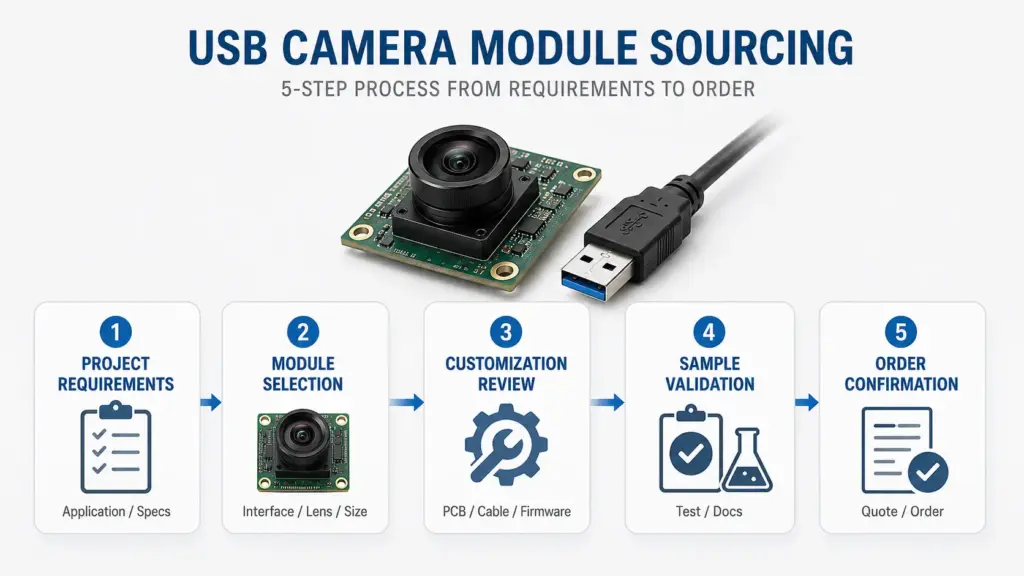
Send your camera module requirements.
Share your application, target specs, drawings, host system, quantity, and customization needs for camera module technical review.
Manufacturing and Supplier Evaluation Notes
A supplier page should help the buyer evaluate fit without relying on vague trust claims. Supertek’s camera module manufacturing page describes process areas including PCB design, lens assembly, raw material sourcing, focusing, PCB production, SMT process, quality inspection, IC programming, and packing.
For this page, the safe way to use manufacturing information is to point buyers toward process review and document confirmation. Avoid publishing exact production capacity, cleanroom class, certificate status, defect-rate, or lead-time claims unless Supertek confirms that those details are current and approved for publication.
Supplier Evaluation Checklist
| What to Evaluate | What to Ask |
|---|---|
| Product fit | Which USB global shutter options match the application conditions? |
| Engineering support | Can the team review lens/FOV, interface, size, and host requirements? |
| Customization scope | Which changes are possible for PCB, cable, connector, housing, lens, filters, or firmware? |
| Manufacturing process | What production and inspection steps apply to this module type? |
| Sample validation | What should be tested before pilot or mass production? |
| Documents | Which datasheets, drawings, test records, or certificates are available for this order? |
| Commercial terms | What are the current MOQ, lead time, warranty, payment, shipping, and packaging terms? |
Documents and Commercial Terms to Confirm
Procurement teams should treat technical fit and commercial fit as separate checks. A module may look right technically but still need document, sample, packaging, or delivery confirmation.
Before ordering, ask Supertek to confirm:
- Product datasheet and approved spec sheet.
- Mechanical drawing or 2D/3D file if needed.
- Lens and FOV information.
- Cable and connector details.
- Supported output format and software/host notes.
- Sample process and validation steps.
- Packaging requirements.
- Certificate or compliance document availability, if relevant.
- Warranty and return terms.
- MOQ, lead time, shipping method, payment terms, and destination-related costs.
This page should not publish fixed MOQ, lead time, warranty, or certification claims until those details are confirmed for the current product and order type.
FAQ
What should I compare before choosing a global shutter USB camera module manufacturer?
Compare the application, motion condition, resolution, frame rate, USB interface, lens/FOV, module size, host system, software needs, customization scope, document requirements, and sample validation plan. The right supplier should help you review both technical fit and purchasing requirements.
Why use a global shutter camera module instead of a rolling shutter module?
A global shutter exposes the image at the same time, which can help reduce motion distortion in moving-object capture. It is often considered for robotics, inspection, traffic/security, and embedded vision projects where object movement can affect image quality. The final choice should still be tested under the real application conditions.
Is USB2.0 or USB3.0 better for my camera module project?
It depends on the required resolution, frame rate, host system, cable design, software environment, and cost target. USB3.0 may be considered for higher bandwidth needs, while USB2.0 may be enough for some lower-bandwidth projects. Confirm the interface with Supertek before ordering samples.
What specs matter most in a global shutter USB camera module?
Important specs include shutter type, sensor, resolution, frame rate, USB interface, lens/FOV, focus type, module dimensions, cable and connector, image format, software/host compatibility, lighting condition, and working distance. Specs should be reviewed together instead of one by one.
Can a global shutter USB camera module be customized?
Supertek’s customization page lists customization discussion areas such as module dimensions, hardware modification, firmware modification, PCB size, lens type, cable length, housing, LEDs, connectors, and filters. For a specific project, confirm feasibility, sample process, cost, and timing with Supertek.
What information should I send for a quotation?
Send your application, target resolution and frame rate, preferred USB interface, lens/FOV, working distance, lighting condition, module size limit, cable and connector needs, host system, software environment, quantity, customization needs, and required documents.
What documents should procurement ask the manufacturer for?
Ask for the current datasheet, mechanical drawing, sample terms, test information, certificate availability if applicable, packaging details, warranty and return terms, shipping information, and commercial terms. Do not assume all documents apply to every product or order.
What is the MOQ, lead time, or warranty?
These terms should be confirmed with Supertek based on the selected module, customization scope, quantity, and destination. Avoid relying on general page claims for a specific project until sales or engineering confirms the current terms.
Request Camera Module Technical Review
Share your global shutter USB camera module requirements with Supertek so the team can review the project conditions before quotation.
- Application and motion condition.
- Target resolution and frame rate.
- USB2.0 or USB3.0 requirement.
- Lens/FOV and working distance.
- Module size limit and drawing.
- Cable, connector, and host system.
- Quantity and sample needs.
- Customization requirements.
- Required documents and commercial terms to confirm.