Are you struggling to decide between FPD-Link and GMSL for your next project? Choosing between these 2 protocols can be challenging, but each is recognized to handle high-speed video in industrial applications.
As a specialist in video link technologies, I have worked with these standards in various professional setups. My expertise helps me understand the benefits and best uses for each type of technology.
FPD-Link is widely used in automotive applications, while GMSL offers versatile connectivity for both automotive and industrial purposes.
In this guide, you’ll learn about the technical differences. We’ll also provide insights into the performance of each to help you choose the right option for your needs.
Keep reading to learn more!
1. What is FPD-Link?
FPD-Link, which stands for Flat Panel Display Link, is a high-speed video and data interface developed by Texas Instruments. It was initially designed for the automotive industry to deliver high-quality video between cameras, displays, and other components. Today, the FPD-Link offered by Supertek is widely used because it combines video, control data, and power over a single cable, making it more efficient.
Features
- 1-Cable Automation: FPD-Link combines video, control data, and power transmission in a single cable. This reduces the complexity of the wiring system and saves space.
- High Data Rates: FPD-Link is capable of handling high-speed data, supporting HD video and even some 4K formats. This makes it suitable for applications that need clear and detailed video.
- Long-Distance Transmission: The technology is optimized to maintain signal quality over longer distances. This allows video to be transmitted from one end of a vehicle to the other without signal loss.
- EMI Reduction: FPD-Link uses embedded clock technology, which reduces electromagnetic interference (EMI). This feature is helpful in environments with a lot of electronic activity, like cars.
- Power over Coax (PoC): With PoC, FPD-Link can send power to cameras and other devices through the same cable. This feature reduces the need for additional power cables, saving installation time and space.
Pros and Cons
Pros:
- Simplified Cabling: Since FPD-Link combines video, data, and power in a single cable, it reduces the need for multiple connections. This simplifies installation in compact or complex environments.
- Enhanced Signal Integrity: The technology is built to maintain signal integrity across long distances. This makes it highly effective for applications where the signal must travel across an entire vehicle.
Cons:
- Limited Compatibility: FPD-Link is primarily used in automotive applications, so it may not be compatible with devices outside this industry. Users may face challenges when integrating it into non-automotive systems.
- Higher Cost: FPD-Link can be more expensive than other options, especially for smaller projects. This cost factor may make it less appealing for applications with limited budgets.
- Complexity with Specialized Hardware: To use FPD-Link, specialized components are often needed, which can increase setup complexity. This requirement may lead to additional setup time and costs.
2. What is GMSL?
GMSL, or Gigabit Multimedia Serial Link, is a high-speed interface developed by Maxim Integrated for transmitting video, audio, and data in automotive and industrial applications. It’s especially popular in systems that need to carry multiple types of data over a single cable. With GMSL, users get a versatile setup that can connect cameras, displays, and sensors efficiently across long distances.
Features
- High Bandwidth: GMSL supports high data rates, which means it can carry HD video, audio, and control data without lag. This is useful for applications that require fast and clear information.
- Adaptive Equalization: GMSL uses adaptive equalization to keep signal quality high across long distances. This feature helps maintain clarity, even in complex environments with a lot of electronic signals.
- Support for Multiple Data Types: GMSL can handle various data types, including video, audio, and control signals. This allows for connecting different kinds of devices, such as cameras and sensors, through a single link.
Pros and Cons
Pros:
- Versatile Data Transmission: GMSL can carry multiple types of data, which makes it suitable for projects needing a mix of video, audio, and control signals. As per Edge AI Vision, its transfer speed is about 6 GB per second, which allows for a wider range of applications.
- Long-Distance Support: With strong signal quality over long distances, GMSL is ideal for larger systems that require reliable data transmission. This is particularly useful in large vehicles and industrial setups.
- Cable Options: The ability to use either coaxial or twisted-pair cables provides added flexibility. This means users can choose the cable type that best fits their specific installation needs.
- Efficient Power and Data Delivery: The Power over Cable feature means GMSL can deliver both power and data through 1 cable. This reduces installation complexity and can help save on material costs.
Cons:
- Specialized Hardware Needed: GMSL often requires specific hardware components, which can make the setup more complex. This can increase the initial costs and the time required for setup.
- Higher Cost for Small Projects: GMSL technology may be more expensive than simpler options, which might not be ideal for budget-conscious. This factor could limit its use for some customers.
- Limited Use: While GMSL is excellent for automotive and industrial applications, it may not be compatible with devices in other sectors. This limitation may reduce its appeal in non-automotive projects.
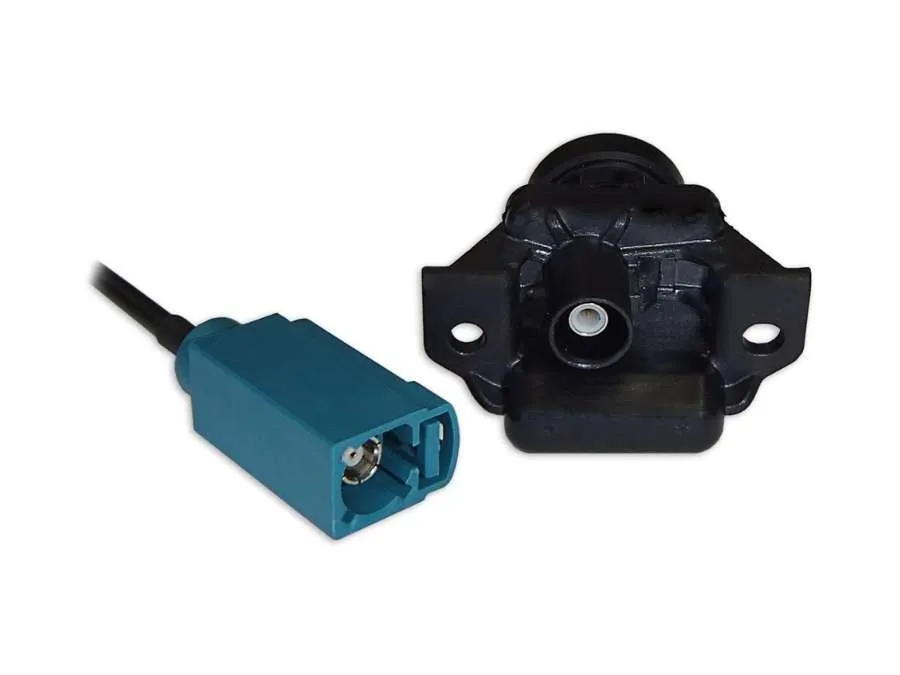
3. Key Technical Comparisons: FPD-Link vs. GMSL
When selecting between FPD-Link and GMSL, it’s helpful to understand their technical differences. Each has unique features that make it better suited for specific applications. Let’s break down the key distinctions in an easy-to-understand comparison table below:
| Feature | FPD-Link | GMSL |
| Primary Use | Primarily used in automotive for camera and display connections. | Used in both automotive and industrial settings for diverse connections. |
| Data Transmission Rate | Supports high-speed data but may be slightly slower than GMSL for large data streams. | Offers faster data rates, making it suitable for high-resolution, multi-signal setups. |
| Cable Type | Typically uses coaxial cables, which are well-suited for automotive environments. | Can use either coaxial or twisted-pair cables, giving it more flexibility in installations. |
| Signal Range | Maintains high signal quality over long distances, ideal for large vehicle systems. | Also effective over long distances but requires adaptive equalization to maintain clarity. |
| Power Transmission | Supports Power over Coax (PoC), allowing it to transmit both data and power through one line. | Also supports PoC, but can be optimized to handle more power-demanding devices. |
| Compatibility | Primarily designed for automotive standards, limiting its use in other sectors. | Versatile in both automotive and industrial applications, providing broader compatibility. |
To sum up, if you’re working in the automotive industry and need a reliable, streamlined connection, FPD-Link is a solid choice. However, for more diverse applications or if you need faster data transmission, GMSL might be the better option. Ultimately, the choice depends on the specific needs of your project.
4. 3 Tips for Choosing the Right Protocol for Your Project
Selecting between FPD-Link and GMSL can be straightforward when you understand your project’s unique requirements. Each protocol has strengths suited for different applications, from automotive to industrial settings. Below, we’ll cover key considerations to help you choose confidently:
#1 Power over Coax (PoC) Capabilities
If your project needs to power devices like cameras through the same cable that carries data, Power over Coax (PoC) is a critical feature. Both FPD-Link and GMSL offer PoC, but GMSL may support higher power requirements. For example, in setups involving power-intensive devices, GMSL could be the more reliable option, while FPD-Link is sufficient for applications with standard power demands.
#2 Adaptive Equalization
In challenging environments where signal quality may be disrupted, Supertek provides GMSL with an adaptive equalization feature that can help maintain clarity. This feature automatically adjusts the signal to reduce noise and interference, which is particularly useful in industrial or multi-signal environments. FPD-Link, while stable, lacks adaptive equalization, which may limit its performance in noisy settings.
#3 Single-Cable Setup
If installation space is limited, the single-cable design of both FPD-Link and GMSL offers a streamlined solution. For instance, FPD-Link combines video, control, and power into 1 cable, reducing clutter in tight spaces. GMSL also supports single-cable setups but offers additional flexibility with cable types, which can be advantageous for projects requiring unique installation setups.
Conclusion
FPD-Link and GMSL each bring valuable features to the table, offering solutions to specific needs in data transmission and video quality. Whether you’re working in automotive or industrial settings, understanding the unique strengths of each protocol can help you make a smart choice for your project requirements.
We hope this guide has given you helpful insights into the differences between FPD-Link and GMSL. If you’ve experienced frustration with slow quotation processes, Supertek is here to help. With a reliable network of high-quality raw material suppliers, we can typically provide a quotation within 48 hours. Contact us today to discuss your needs and explore how we can support your project!
Dive Deeper Into Our Resources
Looking for more diverse service options? Browse through our handpicked selections:
Still haven’t found what you’re looking for? Don’t hesitate to contact us. We’re available around the clock to assist you.